The back-to-school season is one of the busiest sales periods for stationery retailers, wholesalers, and distributors in India. As students get ready for a new academic year, parents shop for school essentials such as notebooks, pens, pencils, erasers, sharpeners, and pencil boxes. For stationery businesses, stocking the right products at the right time helps meet demand, avoid shortages, and capture more sales.
Pencil boxes are a useful addition to a school stationery range because they come in different designs, sizes, colours, and storage configurations. However, simply ordering a large quantity before the season is rarely the best approach. Retailers need to plan their assortment, estimate demand, coordinate with suppliers, and manage inventory according to customer preferences.
In this guide, we explain how stationery retailers can prepare pencil box stock for the school season and build a practical inventory strategy for a smoother selling period.
1. Start Planning Your Pencil Box Inventory Early
The first step is to begin school-season inventory planning before customer demand reaches its peak. Waiting until customers start buying school supplies can limit your product choices and make timely replenishment harder.
Review previous sales records, customer enquiries, and the performance of different stationery products. If certain pencil box designs sold quickly last season, factor that history into your next order.
A practical inventory plan should include:
- The quantity of pencil boxes currently available.
- The designs and variants that sold best previously.
- The products that remained unsold after the last school season.
- Expected demand from regular customers and nearby schools.
- Supplier lead times and expected delivery schedules.
- The budget available for seasonal inventory.
Early planning helps you make informed purchasing decisions instead of relying on last-minute orders.
2. Understand What Your Customers Want
Not every customer looks for the same type of pencil box. A retailer serving primary school students may receive different requests from a shop selling to older students. Similarly, a wholesaler supplying smaller stationery shops may need a broader assortment.
Before placing a bulk order, identify the preferences of your target customers. If you are still comparing options, our plastic pencil box buying guide explains what to look for in different designs.
Consider different pencil box requirements
| Customer Segment | What to Consider When Stocking |
|---|---|
| Parents of younger students | Easy-to-use designs, suitable size, and convenient storage |
| Primary and middle school students | Colourful designs, practical compartments, and everyday usability |
| Older students | Compact designs and enough space for commonly used stationery |
| Stationery retailers | Variety, dependable supply, and commercially suitable ordering quantities |
| Wholesalers and distributors | Assortment planning, supplier consistency, packaging, and replenishment |
These are general planning considerations rather than fixed customer preferences. Review actual sales and enquiries in your market to decide which products deserve more shelf space.
3. Stock a Balanced Range of Pencil Box Designs
Offering a variety of pencil boxes helps you serve customers with different preferences and budgets. However, stocking every available design in large quantities can tie up working capital and create slow-moving inventory.
A more practical approach is to divide your assortment into categories and adjust quantities according to demand. You could evaluate:
- Basic pencil boxes: Practical options for customers looking for everyday school stationery.
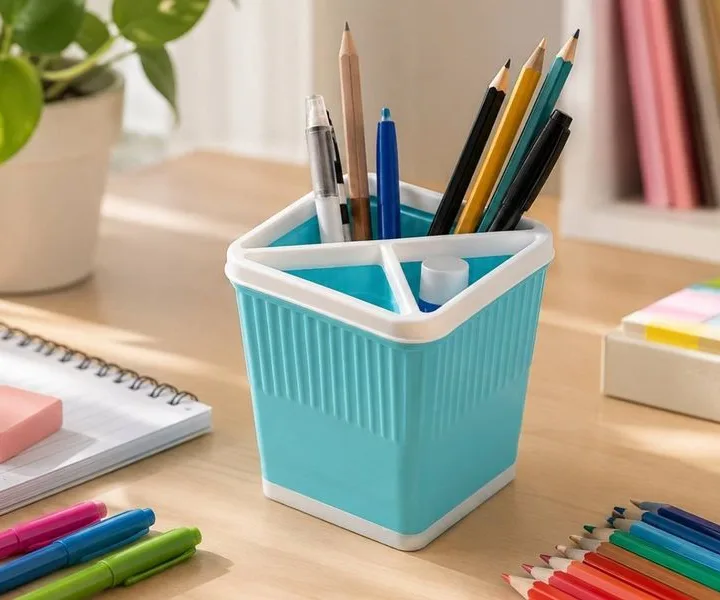
- Multi-compartment pencil boxes: Designs with separate spaces for organising stationery items.
- Double pencil boxes: Options for customers who prefer additional storage sections.
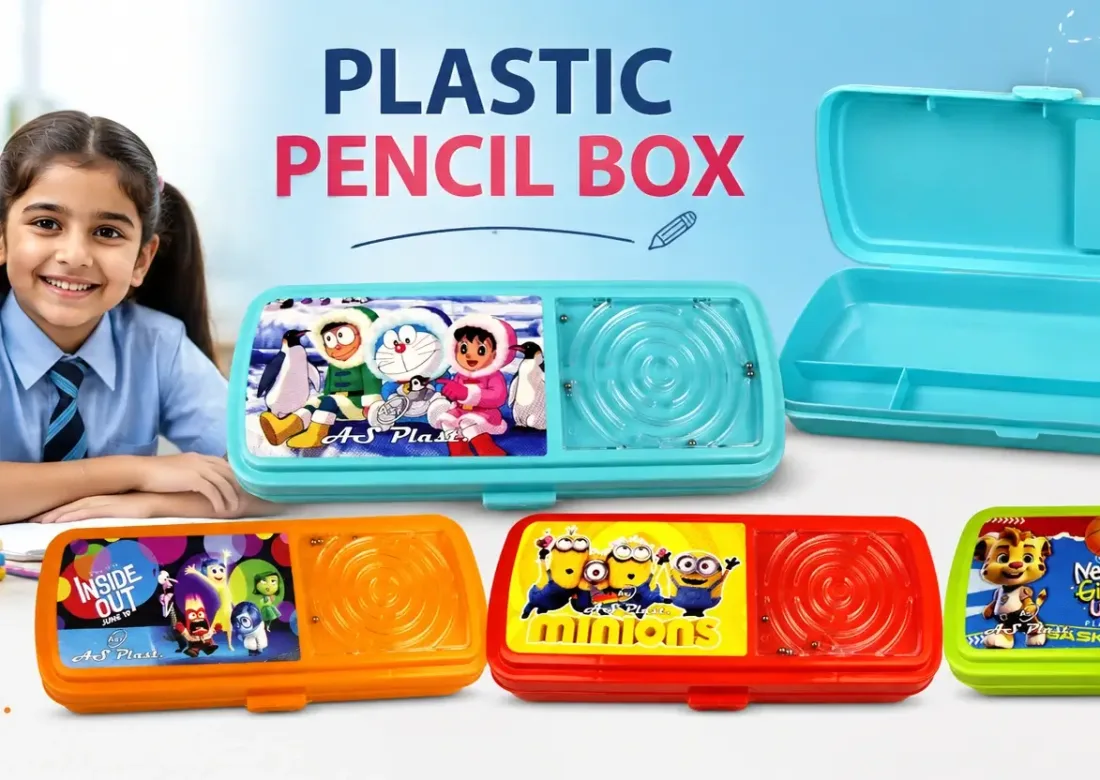
- Novelty or game-themed designs: Products to test where local customers show interest in decorative or playful stationery.
- Compact pencil boxes: Smaller options for customers who prefer a simple design.
Choose categories that match your customer base and the products your supplier actually offers. You do not need to stock every category in equal quantities. If a particular design consistently sells well in your shop, it may deserve a larger share of your next order than a design with limited sales.
4. Use Previous Sales Data to Estimate Demand
Demand forecasting does not require complicated software. Even a basic spreadsheet can help you estimate how many pencil boxes you need for the upcoming school season.
Start by reviewing sales from the previous comparable period. Then consider changes in your customer base, local competition, school reopening schedules, and any confirmed bulk enquiries.
A simple planning formula is:
Estimated order quantity = Forecast demand + Desired closing stock − Current usable stock − Confirmed incoming stock
For example, suppose your estimated demand for a particular pencil box design is 300 units. You want to retain 40 units as closing stock, already have 60 usable units, and have 20 units on order.
Your calculation would be:
300 + 40 − 60 − 20 = 260 units to order
This is an illustrative example, not a market demand estimate. Adjust your forecast using actual sales data, supplier lead times, and your available budget.
For a new design with no sales history, consider a smaller initial order where the supplier’s minimum order quantity and commercial terms allow it. Customer response can then guide future purchases.
5. Choose a Reliable Pencil Box Manufacturer or Wholesale Supplier
Your supplier plays an important role in seasonal inventory planning. Even a well-prepared sales strategy can be derailed by delayed deliveries, inconsistent product specifications, or difficulty replenishing popular designs. For a deeper look at this decision, read our guide on how to choose a plastic products manufacturer for bulk orders.
Before placing a bulk order, evaluate the supplier on practical business criteria.
Supplier evaluation checklist
- Product range: Does the supplier offer the pencil box designs and variants your customers need?
- Product consistency: Are the materials, finish, dimensions, and design details consistent with the agreed specifications?
- Order quantities: Are the minimum order quantities suitable for your business?
- Pricing: Can you calculate your total purchase cost after accounting for freight, applicable taxes, and other charges?
- Delivery schedule: Can the supplier commit to a realistic delivery date before the selling period?
- Packaging: Are products packed appropriately for transport, storage, and handling?
- Reordering: Can you place repeat orders if popular designs sell faster than expected?
- Communication: Does the supplier respond clearly to product, payment, and dispatch enquiries?
For wholesalers and distributors, these checks matter even more, because supplier delays can affect several downstream retailers.
AS Plast manufactures a range of plastic pencil boxes. Retailers and bulk buyers can review the available designs and contact the business to confirm current options, order quantities, pricing, and delivery arrangements.
6. Calculate Your Pencil Box Budget Before Ordering
A seasonal purchase should be based on both expected demand and available working capital. Ordering more than you can sell leaves money tied up in unsold stock after the school season.
Before confirming a purchase, estimate the complete cost of acquiring and selling your inventory. Consider:
- Product purchase cost.
- Transportation and freight.
- Applicable taxes and handling charges.
- Storage and inventory management.
- Packaging or additional preparation, where required.
- Expected discounts and selling expenses.
- Working capital needed for other stationery products.
A retailer may be tempted to order a large quantity because the per-unit price is lower. But if the product sells slowly, the extra inventory creates storage costs and reduces the money available for fast-moving items.
Compare the total cost of different order quantities rather than looking only at the price per pencil box.
Retailer tip: Keep some purchasing capacity available for replenishing products that sell faster than expected. A flexible inventory budget is often more useful than spending the entire seasonal budget on the first order.
7. Coordinate Pencil Box Stock With Other School Stationery
Pencil boxes are usually purchased as part of a broader school stationery shopping trip. Retailers can use this to plan complementary inventory and make shopping more convenient. Our school stationery wholesale buying guide covers this in more detail.
Depending on your store’s range, consider stocking pencil boxes alongside:
- Pencils and pens.
- Erasers and sharpeners.
- Rulers and geometry essentials.
- Notebooks and writing pads.
- School bags and other school accessories, where relevant.
A customer buying a pencil box may also need pencils, an eraser, and a sharpener. Keeping these products nearby helps them find related items quickly, even if you source them from different suppliers.
You can also create school stationery bundles based on customer requirements. Make sure bundle pricing covers the cost of every item and leaves an acceptable margin.
For wholesalers, planning pencil box purchases alongside other stationery categories helps you build a complete school-season assortment for the retailers you supply, with each category sourced from the right specialist manufacturer.
8. Organise Storage and Stock Records
Inventory management does not end when the products arrive. Pencil boxes need to be stored properly and recorded accurately so that staff can identify available quantities and replenish stock when necessary.
Use a simple stock register or inventory management system with the following fields:
| Inventory Field | Purpose |
|---|---|
| Product name or SKU | Identifies each pencil box variant |
| Opening stock | Records the quantity available at the start of the period |
| Quantity received | Tracks new purchases and deliveries |
| Quantity sold | Records sales against each product |
| Damaged or unsellable units | Separates unusable stock from available inventory |
| Current stock | Shows the remaining usable quantity |
| Reorder level | Indicates when another order should be considered |
| Supplier and order date | Helps track purchasing and replenishment |
Label different designs and variants clearly. This is particularly useful when products have similar colours or packaging.
Review stock records regularly during the school season. A product may appear available in the system but be missing from the shelf, damaged in storage, or reserved for a bulk customer. Accurate records prevent overselling and make replenishment decisions easier.
9. Set Reorder Levels for Fast-Moving Pencil Boxes
A reorder level helps you decide when to purchase more stock before a popular product runs out.
A simple approach is to estimate the quantity you expect to sell during the supplier’s lead time and add a safety-stock allowance.
Reorder point = Expected demand during supplier lead time + Safety stock
For example, if you expect to sell 10 units per day, your supplier takes 7 days to deliver, and you want a safety stock of 20 units:
(10 × 7) + 20 = 90 units
In this example, consider placing a replenishment order when usable stock approaches 90 units, subject to the supplier’s minimum order quantity and your available budget.
These numbers are illustrative. Your actual reorder point should reflect your sales rate, delivery reliability, and seasonal demand.
Review reorder levels more frequently during peak sales periods. A threshold that works in a normal month may not be enough when demand rises.
10. Prepare Your Store for the School Shopping Rush
Having the right inventory is only part of seasonal preparation. Customers also need to find products easily, and staff should be able to answer questions about available designs and prices.
Use these practical steps to prepare your store:
- Display pencil boxes where school stationery shoppers can see them easily.
- Group products by design, size, or price range.
- Keep fast-moving variants accessible for quick restocking.
- Display accurate prices and applicable promotional terms.
- Check product condition before placing items on display.
- Keep reserve inventory organised and separate from damaged goods.
- Train staff to check availability and suggest relevant stationery accessories.
- Review inventory more frequently on busy days.
If you sell through WhatsApp, social media, or an online catalogue, update product photos, prices, and availability before promoting the range.
For wholesalers, share the available assortment and order requirements with regular buyers in advance. This helps customers plan their own purchases and reduces last-minute uncertainty.
11. Monitor Sales and Adjust Inventory During the Season
Your initial stock plan is a starting point, not a fixed commitment. Customer preferences may change, some designs may sell faster than expected, and others may stay on the shelf.
Track performance throughout the school season. Monitor:
- Units sold by pencil box design.
- Weekly sales and stock movement.
- Products frequently requested by customers.
- Designs with low sales or repeated customer objections.
- Remaining inventory compared with expected demand.
- Supplier delivery performance.
- Profitability after purchase and selling costs.
If one design sells quickly, check whether you can replenish it before it runs out. If another moves slowly, avoid placing a large repeat order until you understand why.
Near the end of the peak period, review remaining stock and adjust purchasing plans. This reduces the risk of carrying excess seasonal inventory into the next sales cycle.
Common Mistakes to Avoid When Stocking Pencil Boxes
Stationery retailers can improve seasonal planning by avoiding these common mistakes:
Ordering without reviewing sales history: Large purchases based only on assumptions can result in slow-moving stock.
Stocking too many similar designs: A broad assortment is useful, but excessive duplication makes inventory harder to manage.
Ignoring supplier lead times: A late order may arrive after the main demand period has passed.
Focusing only on purchase price: Freight, handling, storage, and unsold inventory all affect the real economics of an order.
Failing to maintain stock records: Inaccurate inventory data leads to stockouts, duplicate orders, and missed sales.
Using the same reorder level all year: Seasonal demand calls for closer monitoring and different safety-stock decisions.
Ignoring complementary stationery: Customers often prefer to buy related school essentials in one place.
Avoiding these mistakes helps you keep better control over inventory, purchasing, and customer service.
Why Retailers Should Plan Pencil Box Purchases With AS Plast
AS Plast is a manufacturer of plastic pencil boxes, offering different types and designs. Retailers and bulk buyers can review the range before the school season to identify suitable variants for their customers and plan purchasing requirements in advance.
Before placing an order, discuss the specific designs you need, available quantities, pricing, minimum order requirements, packaging, and expected delivery schedule. Confirm current product availability and commercial terms directly with the manufacturer.
Explore the AS Plast website to review its pencil box range.
Frequently Asked Questions
1. When should stationery retailers start stocking pencil boxes for the school season?
Retailers should plan purchases ahead of their local school reopening period, allowing enough time for supplier confirmation, delivery, stock checks, and store preparation. The right lead time depends on the supplier’s delivery schedule and the retailer’s location.
2. Which pencil box designs should retailers stock?
Start with designs that match your customers’ preferences and budget. Consider basic, multi-compartment, double, compact, or novelty designs where available. Use sales records and customer enquiries to decide the right assortment rather than buying every design in equal quantities.
3. How can retailers estimate pencil box demand?
Review previous comparable sales, current stock, customer enquiries, expected school-season demand, and supplier lead times. Use these inputs to calculate a forecast, and update it as actual sales data comes in.
4. How can stationery retailers avoid excess pencil box inventory?
Avoid large orders without evidence of demand. Start with realistic quantities, monitor sales by design, set reorder points for fast-moving items, and review unsold stock before making additional purchases.
5. What should wholesalers check before buying pencil boxes in bulk?
Wholesalers should evaluate product consistency, available designs, minimum order quantities, total purchase cost, packaging, delivery commitments, supplier communication, and repeat-order availability.
6. Where can retailers explore plastic pencil boxes from AS Plast?
Retailers and bulk buyers can visit asplast.in to explore the pencil box range and contact AS Plast to confirm available designs, ordering terms, pricing, and delivery details.
Conclusion
Preparing pencil box stock for the school season takes more than placing a bulk order. Stationery retailers need to understand their customers, estimate demand, select a balanced assortment, evaluate suppliers, manage purchasing costs, and monitor inventory throughout the selling period.
A structured approach helps reduce stock shortages, avoid excess inventory, and coordinate pencil box purchases with other school stationery essentials.
Start by reviewing your previous sales, identify the designs your customers prefer, and confirm supplier lead times before placing your next order. With consistent stock monitoring and timely replenishment, your business will be better prepared for the school shopping season.
If you are exploring plastic pencil boxes for your store, AS Plast is worth contacting to discuss current designs and bulk purchasing requirements.