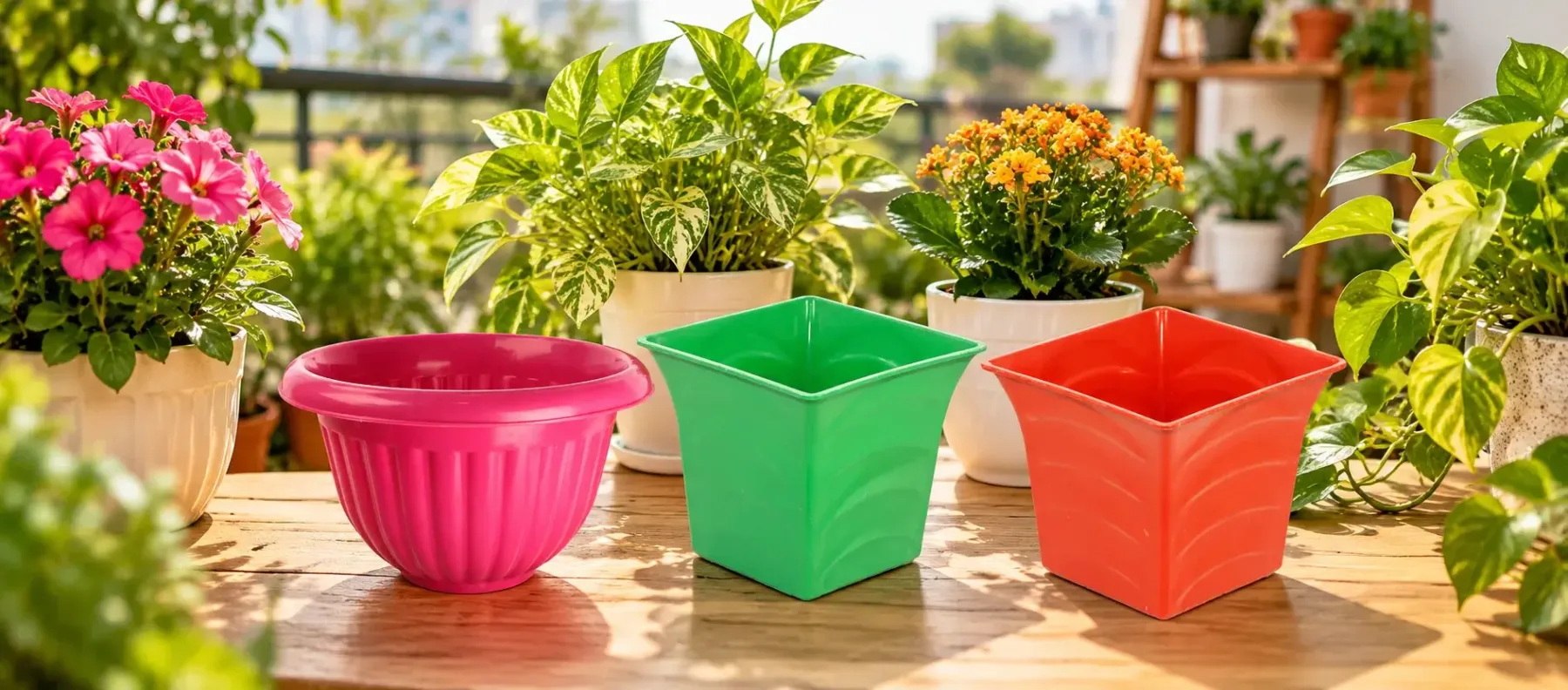
Walk into any Indian balcony, terrace or nursery and you’ll find plastic pots doing most of the work. They’re light, cheap to replace, easy to stack and come in more sizes and colours than almost any other planter. That’s why homeowners, offices, nurseries and garden retailers keep coming back to them.
But a pot that suits a basil plant on a kitchen window will fail a mango sapling on a sunny terrace. Whether you’re setting up a small balcony garden or stocking a shop, the right choice depends on the plant, the space and, for retailers, the supplier.
This guide covers the main types of plastic plant pots, what to check before buying, how to look after them, and what to ask a supplier when you’re buying in bulk in India.
What Are Plastic Pots for Plants?
A plastic plant pot is simply a container that holds soil, supports the roots and gives the plant room to grow. They’re made in many shapes, sizes and finishes, and they’re used for flowers, foliage plants, herbs, vegetables, succulents and indoor greens.
Some are built for planting directly. Others are nursery pots meant to sit inside a decorative outer planter. Knowing which one you’re holding saves a lot of trouble later.
The big draw is weight. Compared with ceramic, concrete or terracotta, a plastic pot is much easier to carry, rearrange and transport, which matters when you’re shifting plants to follow the sun or the monsoon.
Benefits of Using Plastic Pots for Plants
Light enough to move whenever you need to
If you like to rearrange your plants between the balcony, a window and the patio, plastic is the easy option. You can shift a planted pot without straining your back. Retailers and distributors benefit too, since lighter stock is simpler to store, load and deliver.
Plenty of sizes, shapes and colours
Small pots hold seedlings and compact indoor plants. Larger ones give bigger root systems the room they need. The range of colours and finishes also lets you match pots to your balcony furniture, garden layout or office interior.
Easy to clean and maintain
Smooth plastic usually rinses clean with water, so these pots suit beginners and seasoned gardeners alike. Check the manufacturer’s care instructions if you want to use anything stronger than water.
Works indoors and outdoors
Plastic pots can sit on a shelf, a tabletop or a sunny terrace, as long as the product is made for that setting. Indoors, look for a size that fits the spot. Outdoors, look for proper drainage, enough capacity and a material that can handle sun and rain.
Stackable for storage and transport
Many plastic pots nest inside one another when empty. How much space you actually save depends on the shape and build, so it’s worth checking before you place a bulk order. For nurseries, garden shops and distributors, that can bring real savings on storage and freight.
Different Types of Plastic Pots for Plants
The five types below cover most home, nursery and retail needs.
| Type | Best for | Check before buying |
|---|---|---|
| Small pots | Seedlings, herbs, succulents, desk and windowsill plants | Depth and diameter, so roots have room |
| Medium pots | Flowering and foliage plants, some vegetables | Plant’s mature size and watering needs |
| Large pots | Shrubs, bigger ornamentals, outdoor planting | Filled weight, stability, drainage, floor or ledge strength |
| Decorative pots | Homes, offices, balconies | Drainage holes, or whether an inner nursery pot is needed |
| Nursery and seedling pots | Growing on and selling young plants | Size consistency, stackability, material quality |
Small plastic pots
These are the starting point for seedlings, young plants, herbs and compact succulents. They fit on windowsills, desks and kitchen shelves where space is tight. Look at both depth and width, because a pot that’s too shallow will cramp the roots early.
Medium-sized pots
Medium pots give a plant noticeably more room and are the usual pick for balconies, patios and home gardens. They suit many flowering and foliage plants and a few vegetables. Pick the size by the plant’s full-grown height, its roots and how thirsty it is.
Large pots
Bigger plants need more soil and more root space, and large pots deliver that. Before you buy one, think about what it will weigh once filled and watered. Make sure the spot can take that load, and that the pot won’t tip in wind.
Decorative pots
These are chosen for looks, and they come in plenty of colours, finishes and shapes. Some are designed to hold a separate nursery pot, while others can be planted directly. Always confirm whether there’s a drainage hole.
Nursery and seedling pots
Growers use these to raise plants before they’re transplanted or sold. If you’re buying them in bulk, look closely at dimensions, material quality, stackability and how uniform they are from batch to batch.
How to Choose the Right Plastic Pots for Plants
Colour and design come last. Work through these checks first.
1. Get the size right
The pot should give the roots enough room without swallowing the plant. Too small, and growth gets restricted. Too big, and the soil can hold more moisture than the plant wants, depending on the mix and drainage. Check what the plant needs and match both diameter and depth to it.
2. Look for drainage holes
Most potted plants don’t like sitting in wet soil. Standing water cuts oxygen around the roots and invites root problems. For direct planting, choose a pot with suitable drainage holes. If you love a decorative pot that has none, keep the plant in a nursery pot inside it and water carefully.
3. Judge the material
Look for even construction, sensible wall thickness and a clean finish. For outdoor use, ask whether the pot is made to handle strong sun and changing weather. Don’t assume every plastic pot has the same UV resistance or lifespan, because they don’t.
4. Match the pot to the plant
Succulents and some herbs are happy in compact containers. Larger foliage plants and certain flowering plants need deeper or wider ones. A quick look at each plant’s root habit and moisture needs will save you from repotting too soon.
5. Pick colours and designs that suit the space
Neutral tones sit well in minimalist interiors, while brighter colours work on balconies and in decorative garden corners. If you’re a retailer, a mix of practical sizes and a few popular designs will serve most customers better than a huge range of everything.
6. Decide on indoor or outdoor use
Indoors, think about size, looks, drainage arrangements and protecting the surface under the pot. Outdoors, check stability, build, drainage and how the pot will cope with sun and rain. Tall plants may need a heavier or wider-based pot so they don’t topple.
Plastic Pots for Plants: Buying Guide for Retailers and Wholesalers in India
India’s gardening market is broad, fed by home gardening, nurseries, landscaping, offices and decorative plant displays. If you’re sourcing plastic pots for resale, a few checks before the first order can prevent expensive mistakes.
| What to check | Questions to ask the supplier |
|---|---|
| Range | Which sizes and styles are in stock? Do they match what my customers actually buy? |
| Consistency | Will dimensions, colours and finish stay the same from one order to the next? Can I see samples or specifications? |
| Price and quantity | What’s the minimum order? How does price change with volume, packaging and delivery? |
| Packaging and freight | How are the pots packed and stacked? What’s the damage and deformation risk in transit? |
| Reliability | How clear is communication on availability, lead times, payment terms and damaged goods? |
Start with the range
A useful assortment usually mixes small nursery pots, medium plant pots, larger containers and a few decorative options. The right mix depends on your customers, your shelf space and local demand, so find out which sizes and styles sell in your market before you commit to a big order.
Quality and consistency matter more in bulk
When you buy at volume, uneven dimensions or colour shifts between batches become your problem on the shelf. Ask for samples or written specifications, especially if you supply several outlets and need the same product every time.
Look past the unit price
Wholesale pricing moves with design, size, material, order volume, packaging and delivery. Compare the total cost of buying and handling, not only the rate per piece. Pin down minimum order quantities, delivery timelines, payment terms and the policy on damaged goods before you finalise anything.
Plan for bulk, bulky stock
Plastic pots weigh little but take up a lot of room, and shape and stacking design decide how efficiently they pack. Think through protective packaging, storage space, transport cost and the chance of pots getting crushed or warped in handling.
Choose a supplier you can rely on
A good supplier is upfront about specifications, order terms, availability and delivery. For repeat orders, ask whether they can keep supplying consistently and whether their range will still fit your needs as the business grows.
How to Maintain Plastic Plant Pots
A little upkeep keeps pots clean, safe for plants and usable for years.
- Tip out old soil and plant debris before reusing a pot.
- Wash with water, and use a suitable cleaner if needed.
- If the last plant was diseased or pest-ridden, clean and disinfect the pot before replanting.
- Check drainage holes now and then and clear any blockages.
- Keep pots away from heat or sun beyond what the material is meant to handle.
- Inspect older pots for cracks, brittleness or warping.
- Store spares somewhere clean and dry, following the manufacturer’s advice.
When you reuse a pot, make sure it suits the new plant, not just the old one.
Are Plastic Pots for Plants Suitable for Indian Weather?
In most parts of India, yes, but how well a pot holds up depends on its material, build and design, and on where you live.
Summer sun. Long exposure to intense sunlight can wear down some plastics over time. If pots will live outdoors, check whether the product is made for it and whether UV resistance is actually specified.
Monsoon. Heavy rain can leave soil waterlogged, so drainage matters more than ever. Make sure excess water can escape, and don’t leave pots standing in water unless the plant specifically needs that.
Hot regions. Pot colour, size, soil mix, watering habits and placement all affect root-zone temperature and moisture. Choose by what the plant needs and what your local climate throws at it.
Why Consider AS Plast for Plastic Products in India?
AS Plast is an Indian plastic products brand. If you’re sourcing plastic products, start by reviewing its current range and confirming specifications, order quantities and availability for the exact items you need.
For retailers, wholesalers and distributors, the questions that matter are product suitability, consistency, pricing, packaging and whether the supplier can meet your volumes.
If you’re exploring plant pots for resale or bulk purchase, contact AS Plast directly to confirm which pot designs and sizes are available right now. Ask for product details and commercial terms before you decide.
Frequently Asked Questions About Plastic Pots for Plants
1. Are plastic pots good for home gardening?
Yes. They’re light, easy to handle and come in many sizes and designs. Pick a size that suits the plant and make sure there’s proper drainage.
2. Which size plastic pot is best?
It depends on the plant’s roots, how big it will grow and how much water it needs. Small pots suit seedlings and compact plants, while larger plants need more space. Check the plant’s requirements first.
3. Can plastic pots be used outdoors in India?
Many can. Just check that the product is made for strong sun, heat and rain, and confirm UV resistance instead of assuming it.
4. Do plastic pots need drainage holes?
Most potted plants do better with them, because they let excess water out and reduce the risk of waterlogged soil. A decorative pot without holes can work as an outer container with a separate planting pot inside.
5. Can I buy plastic plant pots wholesale in India?
Yes, through manufacturers, wholesalers, gardening suppliers and nursery-product distributors. Confirm availability, minimum order quantities, pricing, packaging and delivery terms before ordering.
6. How should a retailer choose a pot supplier?
Look at quality, size range, consistency, wholesale pricing, packaging, delivery reliability and order terms. Samples and written specifications cut the risk before a bulk order.
7. How long do plastic plant pots last?
That depends on the plastic, the build quality, sun and weather exposure, handling and care. A pot made for outdoor conditions can behave very differently from one meant mainly for indoor use.
Conclusion
Plastic pots are a practical choice for home gardens, balconies, nurseries, offices and commercial displays. They’re light, they come in many sizes and styles, and they suit a wide range of plants.
To choose well, think about the plant’s size, drainage, material quality, weather exposure and how you’ll maintain the pot. If you’re buying for resale, add product consistency, pricing, packaging and supplier reliability to that list.
Whichever way you’re buying in India, compare specifications and confirm availability before you order. If you’re looking at plastic products for plant pots, AS Plast is worth contacting to check what’s currently offered.