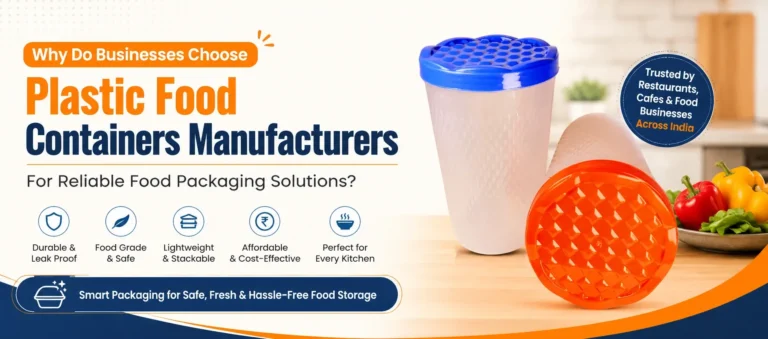
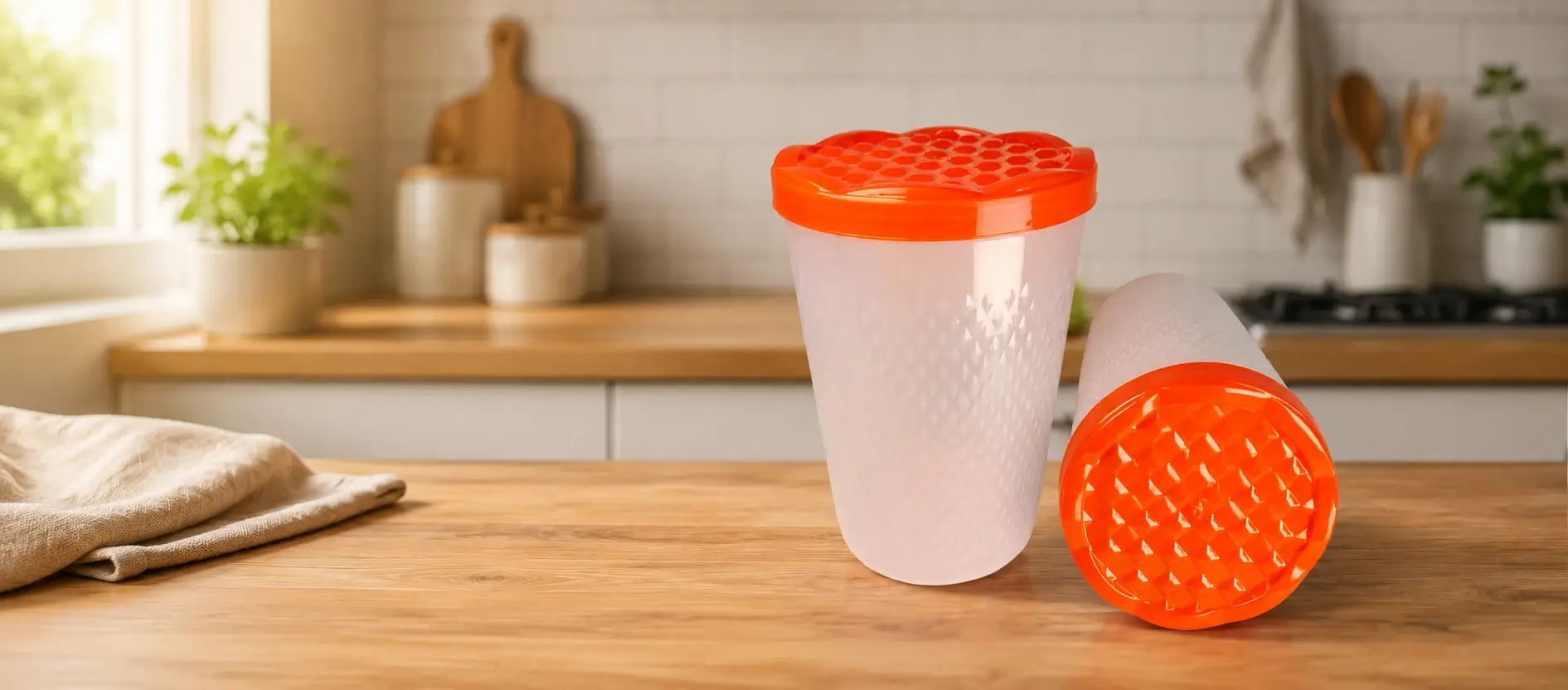
Plastic jars are widely used across India’s food, FMCG, cosmetic, pharmaceutical, personal care and industrial sectors because they offer a practical combination of durability, lightweight handling and flexible packaging options. However, choosing the right jar requires more than selecting a size. Material, closure, product compatibility, appearance, quantity and supplier reliability all matter. AS Plast can help businesses evaluate their plastic packaging requirements and identify suitable jar options for their products.
What Are Plastic Jars?
Plastic jars are rigid packaging containers made from materials such as PET, HDPE or PP and designed to store, protect, display and transport different types of products.
Unlike flexible pouches, jars provide a structured container that can be designed in different capacities, shapes, colours and closure configurations. This makes them suitable for products that need convenient filling, storage and dispensing.
For Indian businesses, plastic jars can be useful when packaging needs to balance product protection, handling convenience, presentation and commercial practicality.
Common Types of Plastic Jars
The right jar depends largely on the product and its packaging requirements. Common options include:
- PET jars
- HDPE jars
- PP jars
- Transparent plastic jars
- Opaque jars
- Wide-mouth jars
- Screw-cap jars
- Plastic jars with lids
- Specialty or customized jars
Material selection should always consider the product being packaged and its storage conditions.
PET, HDPE and PP: What’s the Difference?
PET, HDPE and PP are commonly used plastics, but they have different characteristics.
| Factor | PET | HDPE | PP |
|---|---|---|---|
| Appearance | Often clear and glossy | Often opaque or translucent | Available in various finishes |
| Common Advantage | Product visibility | Durability and resistance | Versatility and heat resistance |
| Typical Applications | Food, beverages and consumer products | Household, chemical and industrial products | Food, healthcare and consumer packaging |
| Selection Depends On | Product and appearance | Compatibility and durability | Product and temperature requirements |
There is no single material that works best for every application. A packaging supplier should evaluate the product, filling process, storage environment and required closure before recommending a material.
Where Are Plastic Jar Containers Used?
Plastic jar containers are used across industries where products require rigid, convenient and scalable packaging.
Their applications range from everyday consumer goods to specialized industrial products.
Food and FMCG
Businesses use plastic jars for products such as:
- Spices
- Dry fruits
- Snacks
- Pickles
- Food ingredients
- Powders
- Confectionery
- Nutritional products
For food applications, businesses should select packaging appropriate for the specific product and intended use.
Cosmetics and Personal Care
Plastic jars are also common in cosmetic and personal care packaging.
Typical applications include:
- Creams
- Face masks
- Scrubs
- Body-care products
- Hair-care products
- Beauty products
Appearance matters significantly in this category. Clear, coloured or customized packaging can contribute to product presentation and shelf appeal.
Pharmaceutical and Healthcare Products
Plastic jars may also be used for selected pharmaceutical, healthcare and nutraceutical products.
The appropriate material, closure and packaging specifications depend on the product and applicable requirements. Businesses should therefore confirm compatibility and regulatory suitability before placing production orders.
Chemical and Industrial Products
Durable plastic jars can be useful for certain:
- Powders
- Adhesives
- Industrial compounds
- Specialty materials
- Chemical products
For these applications, chemical compatibility should be evaluated before selecting the container.
Key Benefits of Plastic Jars for Businesses
Plastic jars offer businesses a combination of durability, convenient handling, design flexibility and practical packaging performance.
1. Lightweight Handling
Plastic containers are generally easier to handle and transport than many rigid alternatives. This can be useful for businesses managing large distribution networks.
2. Durable Construction
Suitable plastic jars can withstand routine handling during filling, storage and transportation. The required durability depends on material, wall design and application.
3. Flexible Designs
Plastic jars can be produced in different:
- Shapes
- Capacities
- Neck finishes
- Colours
- Closures
- Surface finishes
This allows businesses to select packaging that matches their product and brand requirements.
4. Product Visibility
Transparent plastic jars can allow customers to see the product inside. This can be especially useful for products where appearance influences purchase decisions.
5. Convenient Storage
Many jar designs are easy to stack, store and handle. The actual stacking performance depends on the jar’s shape and design.
6. Branding Potential
Labels, colours, shapes and other packaging elements can help businesses create a distinctive shelf presence.
Looking for packaging for a new product or a recurring requirement? Discuss your plastic jar requirements with AS Plast to identify suitable options.
How to Choose the Right Plastic Jar for Your Product
The best plastic jar is the one that matches the product, capacity, material requirements, closure, handling conditions and purchasing volume.
Before ordering, evaluate these factors:
- Product compatibility: Ensure the material is appropriate for the product.
- Capacity: Select a jar size that matches the required fill quantity.
- Material: Compare PET, HDPE, PP or other suitable options.
- Shape: Consider storage, transportation and shelf presentation.
- Closure: Choose a suitable lid, cap or sealing configuration.
- Transparency: Decide whether customers need to see the contents.
- Protection: Consider moisture, contamination and handling requirements.
- Branding: Check whether the packaging supports your labelling requirements.
- Order Volume: Establish whether the supplier can support recurring bulk requirements.
- Delivery: Consider lead times, packaging and transportation requirements.
This approach helps procurement teams avoid selecting containers based only on price.
Why Buy Plastic Jars in Bulk?
Bulk purchasing can simplify packaging procurement for businesses with regular or high-volume requirements.
For manufacturers, FMCG brands, distributors and retailers, buying plastic jars wholesale can provide several operational benefits.
- More predictable packaging supply
- Consistent container specifications
- Easier inventory planning
- Streamlined procurement
- Potential commercial efficiencies
- Better planning for recurring production
- Easier coordination with distributors and manufacturing teams
However, businesses should evaluate more than unit price. Quality consistency, delivery reliability, minimum order requirements and product compatibility can have a significant effect on the overall procurement decision.
How to Choose a Reliable Plastic Jar Manufacturer in India
A reliable plastic jar supplier should provide consistent products, suitable material options, dependable communication and the ability to support your business requirements.
Before choosing a plastic jar manufacturer in India, ask:
- What materials are available?
- What jar sizes and designs are offered?
- Are different closure options available?
- Can the supplier support bulk orders?
- Can packaging specifications be customized?
- How is product consistency maintained?
- What are the expected lead times?
- What are the minimum order requirements?
- Can the supplier support recurring orders?
- How does the supplier handle quality-related concerns?
For businesses in major commercial markets such as Delhi, Mumbai, Bengaluru, Hyderabad, Chennai, Pune, Ahmedabad, Kolkata, Noida and Gurugram, supplier selection should also consider logistics and delivery requirements.
A supplier with a suitable product range is useful, but dependable fulfilment matters just as much for long-term B2B procurement.
Real-World Illustrative Example
Consider an Indian spice brand preparing to expand from local retail distribution into multiple cities.
Initially, the company uses inconsistent containers from different suppliers. Some jars have different shapes, while others use different lid finishes. This creates an inconsistent appearance across the product range and complicates inventory planning.
The company can instead establish a defined packaging specification covering:
- Jar capacity
- Material
- Shape
- Lid type
- Colour
- Labelling area
- Required order quantity
- Delivery schedule
The business can then work with a suitable supplier to maintain greater consistency across production batches.
This is an illustrative example, not a claim about an actual AS Plast customer.
How AS Plast Can Help With Plastic Jar Requirements
AS Plast can be considered by businesses looking for plastic jars and plastic jar containers for different commercial applications.
Whether you are a manufacturer, wholesaler, distributor, retailer or brand, the right packaging starts with understanding your product and procurement requirements.
When discussing your requirement, it is useful to provide:
- Product type
- Required jar capacity
- Expected quantity
- Preferred material, if known
- Closure requirements
- Colour or transparency preference
- Branding requirements
- Delivery location
- Expected purchase frequency
Providing these details helps the supplier understand the application and recommend appropriate options.
Need plastic jars in bulk? Contact AS Plast to discuss your packaging requirements and product needs.
Plastic Jars and Sustainability Considerations
Plastic packaging should be selected with both functional requirements and end-of-life considerations in mind.
Businesses can evaluate:
- Whether the selected material is recyclable through applicable local systems
- Whether the container can be reused for an appropriate application
- Whether unnecessary packaging material can be reduced
- Whether the packaging design improves transportation efficiency
- How customers should dispose of the container
The right approach depends on the plastic material, product application, local recycling infrastructure and packaging design.
Sustainability should therefore be considered alongside product protection, safety, durability and commercial requirements rather than treated as a standalone factor.
FAQs About Plastic Jars
What are plastic jars commonly used for?
Plastic jars are commonly used for food, FMCG, cosmetics, personal care, healthcare, pharmaceutical, chemical and industrial products. The suitable jar depends on the product and packaging requirements.
Which plastic is best for making jars?
PET, HDPE and PP can all be suitable for different applications. The right material depends on product compatibility, durability, appearance, temperature and other packaging requirements.
Are plastic jars suitable for food packaging?
Certain plastic jars can be suitable for food packaging when they are manufactured from appropriate materials and meet the applicable requirements for the intended food application. Businesses should verify the specific product specification before use.
What is the difference between PET, HDPE and PP jars?
PET is often selected when transparency and appearance are important. HDPE is known for durability and resistance, while PP offers versatility across several packaging applications. The final selection should be based on the product and operating conditions.
Can I buy plastic jars wholesale in India?
Yes, businesses can source plastic jars wholesale from suppliers and manufacturers serving the Indian B2B market. Bulk buyers should compare product specifications, quality consistency, minimum quantities and delivery capability before selecting a supplier.
How do I choose the right plastic jar size?
Start with the required product fill quantity, then consider headspace, product dimensions, storage, handling and labelling requirements. The jar should be evaluated for the actual product rather than capacity alone.
Can plastic jars be customized?
Customization can include factors such as shape, colour, capacity, closure and branding-related requirements, depending on the manufacturer’s capabilities and order volume.
How do I choose a reliable plastic jar supplier in India?
Compare the supplier’s product range, material options, quality consistency, bulk-order capability, delivery reliability, customization options, communication and ability to support recurring requirements.
Conclusion
Plastic jars remain a practical packaging option for businesses across India’s food, FMCG, cosmetics, healthcare, pharmaceutical, chemical and industrial sectors. But the right container depends on more than appearance or price.
Material, capacity, closure, product compatibility, durability, quality consistency and supplier reliability should all be considered before placing a bulk order.
For businesses searching for plastic jars, plastic jar containers or wholesale plastic packaging in India, AS Plast can be approached to discuss specific product and procurement requirements.
Have a bulk packaging requirement? Get in touch with AS Plast and explore suitable plastic jar options for your business.